Baby & Toddler · Supplies
Baby Formula, Diapers & Baby Food in Japan: The Buying Guide
By the kyounoko team — Tokyo parents who buy this stuff weekly, not researchers paraphrasing labels.
Last verified: August 2026 · written in Tokyo
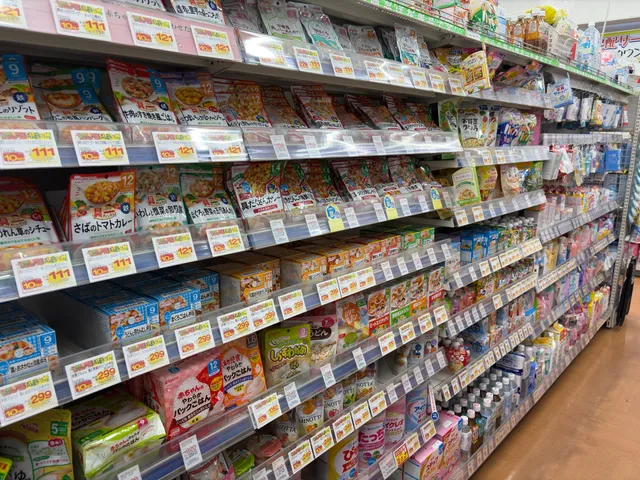
Pack a few days’ supply and buy the rest here: Japan sells excellent formula, diapers and baby food in the drugstores found on practically every shopping street, and the quality rivals or beats what you brought. The only real barrier is the packaging being in Japanese — so this guide gives you the brands, the words on the labels, and the two or three traps (tape vs pants diapers, months-labelled baby food) that catch every visiting parent once.
Where to buy: the three tiers
Drugstores — your default
Matsumoto Kiyoshi, Welcia, Sundrug, Tsuruha: the yellow-and-red signed shops on every busy street. All carry diapers, wipes, formula and baby food at normal prices. This is where Tokyo parents actually shop, and there will be one within a few minutes of your hotel.
Baby superstores — the full range
Akachan Honpo and Nishimatsuya are dedicated baby chains with everything from bottles to strollers. Worth one visit if you need gear rather than refills — there is an Akachan Honpo in most major areas, often inside a mall.
Konbini — the 2am save
7-Eleven, Lawson and FamilyMart are open 24 hours and many stock a small pack of diapers, wipes and sometimes baby food pouches. Pricier per piece and tiny selection, but they have rescued every parent in Japan at least once.
Formula: cubes changed the game
The Japanese brands — Meiji Hohoemi, Glico Icreo, Morinaga E-Akachan — are all excellent, and for travel one product stands out: Meiji Raku Raku Cube (らくらくキューブ), formula compressed into single-serve cubes. No tin, no scoop, no measuring on a hotel desk at 4am — drop the cubes in hot water and shake. Since 2019 Japan also sells ready-to-drink liquid formula in cans and cartons (Icreo and Meiji both make it), which is the flight-day and day-trip answer. Both forms are in any drugstore’s baby aisle.
If your baby is settled on a specific home brand, bring enough to mix-feed through the transition — Japanese formulas are close in composition but not identical, and mid-trip is nobody’s favourite time for a full switch. (General information, not medical advice — ask your pediatrician if unsure.)
Diapers: read two things on the pack
Japanese diapers — Merries, Moony, Goo.N, and locally-made Pampers — are famously good. Two things decide which pack you grab:
- Size is by weight, in kilograms, printed on the front: NB (newborn), S, M, L, Big. Weigh-convert before you go if you think in pounds — a 20lb baby is about 9kg, which is usually size L.
- Tape or pants: テープ (tēpu) is the classic tape-fastened diaper for younger babies; パンツ (pantsu) is the pull-up style for movers. The packs look similar — this word is the difference.
- Wipes (おしりふき) are sold everywhere; the refill packs are cheapest. Swim diapers exist but mainly in summer and at bigger stores — pack them if a pool day is planned.
Diaper sizes: pounds → kilograms → the Japanese size
Japanese packs print a weight range in kilograms, and nothing else that helps. If you think in pounds, this is the whole conversion. The ranges below are Merries’ printed ranges; Moony, Goo.N and Japanese Pampers run within a kilo or two of these, and the exact range is always on the front of the pack — so read the pack, and use this table to know which one to reach for. (British and Australian readers: nappies = おむつ, same word on the shelf.)
| Japanese size | Weight (kg) | ≈ pounds | Type you’ll find |
|---|---|---|---|
| NB (新生児) | up to 5 kg | to 11 lb | Tape |
| S | 4–8 kg | 9–18 lb | Tape |
| M | 6–11 kg | 13–24 lb | Tape and pants |
| L | 9–14 kg | 20–31 lb | Tape and pants |
| Big (ビッグ) | 12–22 kg | 26–49 lb | Pants |
Ranges overlap on purpose — a 10 kg baby fits M or L, and Japanese parents size up as soon as the leg gathers leave a mark. When in doubt, take the bigger size. Source: manufacturer size guide, checked August 2026; pound figures are our conversion, rounded.
Baby food: the months number is your key
Japanese baby food (Kewpie jars, Wakodo pouches and boxes) is mild, cheap and everywhere. You do not need to read the flavour — you need the age stage, printed big on the front as a number plus ヶ月 (months): 5ヶ月 from five months, 7ヶ月, 9ヶ月, 12ヶ月. Rice porridge (okayu), vegetable blends and noodle dishes dominate; flavours run gentler than Western jars, which most babies take to without fuss. And remember from our restaurant guide: bringing your own baby food into family chains is normal and accepted here.
The vocabulary card
- おむつdiapers
- 粉ミルクpowdered formula
- 液体ミルクliquid formula
- 離乳食baby food
- おしりふきbaby wipes
- テープ / パンツtape type / pants type
- 軟水soft water (formula-safe)
- ヶ月months (age label)
Show the Japanese word to any staff member and point — it works better than pronunciation.
Common questions
Can I buy baby formula in Japan?
Yes, easily — every drugstore and baby store carries the major Japanese brands (Meiji, Glico, Morinaga), and they are excellent quality. The travel-friendly form is Meiji’s Raku Raku Cube: single-serve cubes you drop into hot water, no scooping or measuring. Ready-to-drink liquid formula in cans and packs has also been sold in Japan since 2019.
Is Japanese tap water safe for making formula?
Yes. Japanese tap water is drinkable nationwide and soft (low mineral content), which is exactly what formula preparation wants. Boil it as you would at home for a young baby. If you prefer bottled, choose a Japanese brand labelled 軟水 (soft water) rather than imported mineral water.
What diaper brands does Japan have, and how do sizes work?
The big four are Merries, Moony, Goo.N and Japanese-made Pampers, all high quality. Sizes go by weight, printed in kg on the pack: NB (newborn, to about 5kg), S, M, L, Big. The one trap is tape versus pull-up pants — テープ means tape type, パンツ means pants type — so check that word before you buy.
Do convenience stores sell diapers and baby food?
Many do — 7-Eleven, Lawson and FamilyMart often stock a small emergency pack of diapers, wipes, and sometimes baby food pouches, 24 hours a day. Selection is tiny and prices are higher than drugstores, but at 2am with a surprise blowout, the konbini is the answer.
Can my baby eat Japanese baby food?
Japanese jarred and pouch baby food (Kewpie and Wakodo are the big brands) is mild, high quality and cheap. Ages are labelled in months with a number plus ヶ月 — 5ヶ月 means from 5 months, 7ヶ月 from 7 months, and so on — so you can match your baby’s stage even without reading the rest of the label.
Where do I buy diapers (nappies) in Japan?
At a drugstore — Matsumoto Kiyoshi, Welcia, Sundrug or Tsuruha, the yellow-and-red shops on every busy street. All of them stock Merries, Moony, Goo.N and Japanese Pampers in every size, at normal prices. Baby superstores (Akachan Honpo, Nishimatsuya) have the full range; convenience stores carry a small emergency pack at a higher price. Pack two or three days’ worth and buy the rest here.
Can I buy Pampers in Japan?
Yes, but it is the Japanese-made Pampers line, not the version sold in North America or Europe — sizing follows the Japanese kg ranges (S, M, L, Big) and the cut is a little slimmer. Most visiting parents find it, and the local brands Merries and Moony, at least as good as what they brought.
Brands and product lines shift over time — everything here is how the shelves looked when we last verified, and none of it is medical advice.
Two things worth sorting before you fly
Some links below are affiliate links. If you book through them we may earn a small commission, at no extra cost to you. We only list things we would actually use — see our disclosure.