Where to go
Tokyo Attractions with Kids: Which Ones Work with a Toddler
By the kyounoko team — facility data from our own Tokyo research database.
Last verified: August 2026 · researched in person in Tokyo
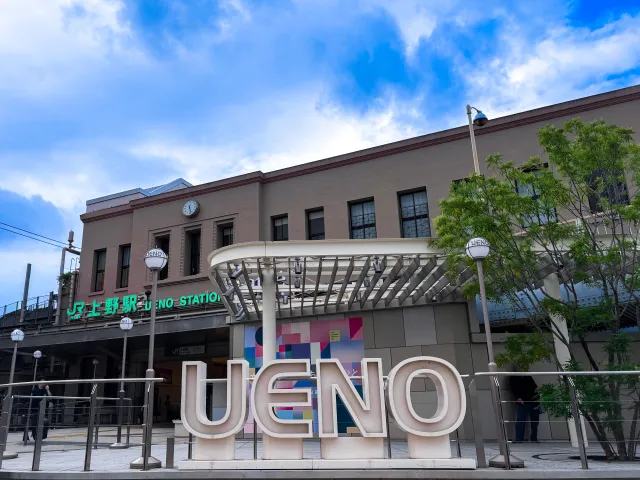
With a baby or toddler, the attraction that works is decided by four things and none of them are on the poster: whether you have to book, whether the stroller comes inside, whether it is indoors, and what age goes free. Below is every Tokyo attraction we have checked ourselves, compared on exactly those, plus where the nursing rooms are.
Four of the six take walk-ups, which is the quality we value most with small children: it makes them the days you can move. Two have to be committed to in advance, and one of those — teamLab — will not let a stroller through the door at all. Knowing which is which before you build the week is worth more than any list of highlights.
The five things that decide the day, side by side
| Attraction | Booking | Stroller | Indoors | Baby room | Free for |
|---|---|---|---|---|---|
| Sumida AquariumSkytree | Not needed — buy at the door | Goes inside with you; rental too | Entirely indoors | Nursing room and changing on site | Under 3 |
| Sensoji TempleAsakusa | None — open grounds, no ticket | Flat and open, but a crush after 10am | Outdoors | Nearest is EKIMISE, above Tobu Asakusa Station | Everyone — no admission |
| Ueno ZooUeno | Not needed — walk up | Yes, and rental on site — but there are slopes | Mostly outdoors | Nursing rooms and changing on site | Up to junior-high age |
| Tokyo TowerShiba | Not needed — walk up and buy | Rental on site | Indoor play area, with Shiba Park outside | Nursing room and changing on site | Under 4 |
| teamLabToyosu (Planets) | Required — date and time tickets, book early | Not allowed inside; carrier only | Indoors | Nursing room and changing at Planets | Young children — age line varies, confirm when booking |
| Sanrio PurolandTama | Recommended — date-designated, peak days sell out | Rental on site | Entirely indoors | Nursing room and changing on site | Under 3 |
Prices, opening hours and facility details change — confirm with the venue for your dates. Facility information is from our own Tokyo research database.
Choose by the morning you are having
This is how the decision actually gets made on a trip with small children — not by ranking sights, but by looking at the child, the sky and the clock and picking the day that fits.
Nobody booked anything and the morning has already gone wrong
Take one of the walk-ups. Sumida Aquarium is the one we suggest most often, because the stroller goes in and the whole thing is under a roof, so neither the weather nor a sleeping child forces a rethink.
Everyone woke at 5am and it is now 7
Sensoji. It is free, open, and pleasant before 10am — the same walk becomes shoulder-to-shoulder from about eleven. Jet lag turns the early start from a problem into an advantage exactly once, so use it. Our jet lag plan covers the rest of that first week.
It is raining, or it is 36°C
Sumida Aquarium or Sanrio Puroland — both are fully indoors, so the forecast stops being part of the decision. For the wider list of places where weather changes nothing, see rainy-day Tokyo with kids.
You want one big, memorable thing and you are organised
teamLab, booked as soon as your dates are fixed — but read the stroller and barefoot rules first, because they decide whether it suits your child at all. Puroland is the same shape of commitment with a much younger floor: it works from babyhood.
Your child is animal-mad and the weather is kind
Ueno Zoo at opening on a weekday. Two to five hours, slopes that tire the adult rather than the child, free for everyone up to junior-high age — and no giant pandas since January 2026, whatever older guides say.
Every attraction we have checked
Each one has a full guide: how long it takes with a small child, where the baby rooms are, what tires the parent out, and what nobody tells you until you are standing there. Four of the six can be walked into on the day.
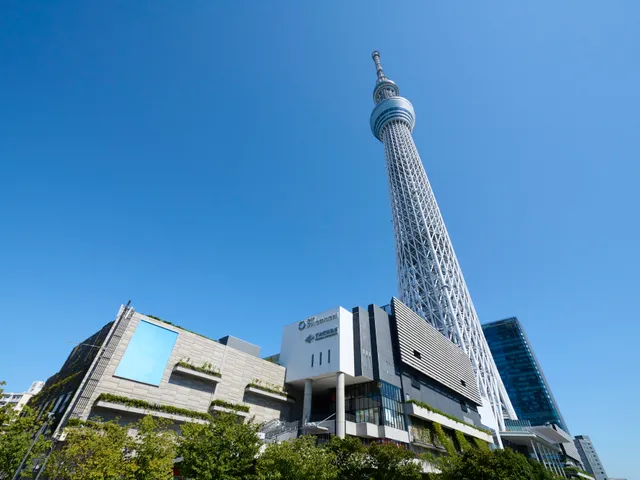
Skytree
Sumida Aquarium
The one that asks nothing of you: the stroller goes in, no ticket to book, and the whole thing is indoors.
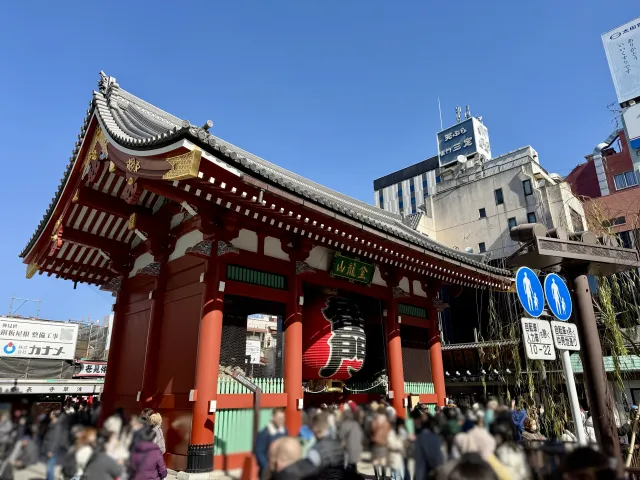
Asakusa
Sensoji Temple
Free, unbookable and flat — which makes it the best thing to do at 7am on the morning jet lag wakes everyone at five.
Ueno
Ueno Zoo
No giant pandas any more, and hillier than it looks. Worth it at opening on a weekday, punishing at midday in August.
Shiba
Tokyo Tower
Go for the indoor play area and the big free park next door, not the view — a two-year-old is done with a view in ten minutes.
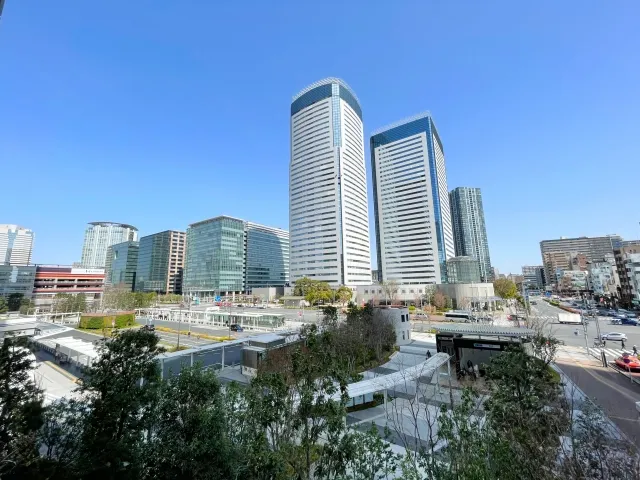
Toyosu (Planets)
teamLab
The stroller cannot come in, and Planets is walked barefoot through warm water. Wonderful, and the least toddler-shaped day on this page.
Tama
Sanrio Puroland
A theme park with a roof on it, and an afternoon pass that lets you turn up after the nap instead of planning around it.
Compare by type, or take a ready-made day
More places we have checked, by what you need
Beyond the headline attractions above, these are the places that solve a specific day — a toddler who needs to burn energy, a wet forecast, a baby who needs a proper nursing room in the middle of a sightseeing block. Each has its own guide with per-age verdicts and our first-hand visit notes.
Toddler attraction
Indoor / rainy-day
Park / run-around
Family rescue hub
Day trip from Tokyo
- Tokyo Disneyland →
- Tokyo DisneySea →
- Yokohama Anpanman Children’s Museum →
- Enoshima Aquarium →
- The Railway Museum (Omiya) →
- Fujiko F. Fujio Museum (Doraemon) →
- Zoorasia (Yokohama Zoo) →
- Hakkeijima Sea Paradise →
- Kawasui (Kawasaki Aquarium) →
- Funabashi Andersen Park →
- Mother Farm →
- Moominvalley Park →
- Tobu Zoo →
- Saitama Children’s Zoo →
- Musashi Kyuryo Forest Park →
- Akebono Children’s Forest Park →
- Chiba Zoological Park →
- Museum of Aeronautical Sciences →
- Kamogawa Sea World →
- Kodomo no Kuni (Yokohama) →
What is not on this list, and why
This is not a list of everything in Tokyo. It is the list of places we have checked ourselves, with the family facilities recorded in our own database — so the Ghibli Museum, the Disney parks and a long tail of museums and playgrounds are missing simply because we have not verified them to that standard yet. We would rather have six pages you can rely on than sixty you cannot.
If your list includes Ghibli or Disney, read the attractions you have to book in advance first — their ticketing rules are strict enough to decide the shape of your whole trip, and Ghibli in particular sells out on the day the tickets are released.
Then work outwards from the station
Picking the attraction is half the day. The other half is what surrounds it: where to eat with a toddler, where the nearest nursing room is, whether the exits have lifts. Each guide above links to the area guide for the station it sits on, where we map the kid-friendly chain restaurants nearby with high chairs, changing tables and stroller access, one station at a time.
Common questions
What are the easiest attractions in Tokyo with a toddler?
The ones you can walk into. Sumida Aquarium, Sensoji, Ueno Zoo and Tokyo Tower all take walk-ups, so you can decide on the morning rather than committing weeks ahead — which matters enormously when a small child has had a bad night. Of those, Sumida Aquarium is the easiest of all: your own stroller goes inside, it is entirely indoors, and there are nursing rooms and changing facilities in the building.
Which Tokyo attractions let you take a stroller inside?
Sumida Aquarium is the clearest yes — you push your own stroller right through it, and rental strollers are available as well. Ueno Zoo is broadly stroller-friendly with rental on site, but the grounds are split into two gardens with slopes, so the parent pushing gets tired. teamLab is the firm no: strollers are not accepted inside the exhibition at all and a carrier is effectively required.
What can you do in Tokyo with kids when it rains?
Sumida Aquarium and Sanrio Puroland are entirely indoors, and teamLab is indoors but has to be booked in advance — which is the opposite of how a rainy-day plan usually works. Tokyo Tower has an indoor play area inside the building. Sensoji and Ueno Zoo are the two on this page that a wet day genuinely spoils.
Which Tokyo attractions do you have to book in advance with kids?
On this page, teamLab runs on date-and-time tickets bought ahead, and Sanrio Puroland is date-designated with peak days selling out. The Ghibli Museum and the Disney parks are also advance-only — our booking guide covers how each ticketing system works and how far ahead to act.
How many attractions should you plan per day in Tokyo with small children?
One. Every entry on this page is at least a half day once you add the travel, the meal and the nap, and the failure mode with a toddler is not missing a sight — it is stacking two and ruining both. Plan one anchor, keep the rest of the day loose, and treat the walk-up attractions as the flexible slots you can move.
Are Tokyo attractions free for babies and toddlers?
Usually, though the cut-off moves: under three at Sumida Aquarium and Sanrio Puroland, under four at Tokyo Tower, and free all the way to junior-high age at Ueno Zoo, which is unusually generous for a major city zoo. Sensoji costs nothing for anyone. Confirm the current bands when you buy, as they change.
Book the trip around it
Some links below are affiliate links. If you book through them we may earn a small commission, at no extra cost to you. We only list things we would actually use — see our disclosure.
Tickets & tours (Klook)
Skip-the-line tickets and family experiences — teamLab, theme parks, day trips and more.
Browse experiences →Family hotels (Booking.com)
Filter for family rooms, cribs and step-free access near the station.
Find family hotels →Japan eSIM (Airalo)
Get online the moment you land — an eSIM installs before you fly, no pocket-wifi pickup counter.
Get a Japan eSIM →